
Part 1: The Workaround Economy
// it was always just the beginning

log 06.03.26
I am an observer and a technomancer. I notice patterns. I notice systems. And lately, I noticed something about the creator economy.
The creator economy is full of people selling $19 guides, $97 courses, and digital downloads about things they genuinely know. Creating communities for their specific area of expertise — some might even call it for their purpose. And for a long time I wondered — why so many? Why this format? Why now?
Then the “aha” hit me.
The person selling a guide about social media success probably wants to run an agency. The travel blogger probably wants to open a resort or plan aligned travel with groups of people to their favorite places. The wellness creator probably wants a practice with a staff and a building and a waiting list.
But they built the smallest thing they could afford. Because that’s what was available to them.
Early in this build, someone whose job is to support me told me — in our first conversation, with almost no context, and without prompting — that I would have trouble getting funding. It came out of the blue during our first call.
If I’m honest, I have been sitting with the feeling of hearing “you’re probably going to have trouble getting funding” for a while.
And then I realized: that moment wasn’t about me. It was about what the system has taught that person to expect. The assumption was structural, not personal. The system had communicated its priorities so clearly, for so long, that even the people inside it trying to help had internalized the limits.
That’s how invisible rulebooks work. They don’t announce themselves. They just shape what feels possible before anyone asks.
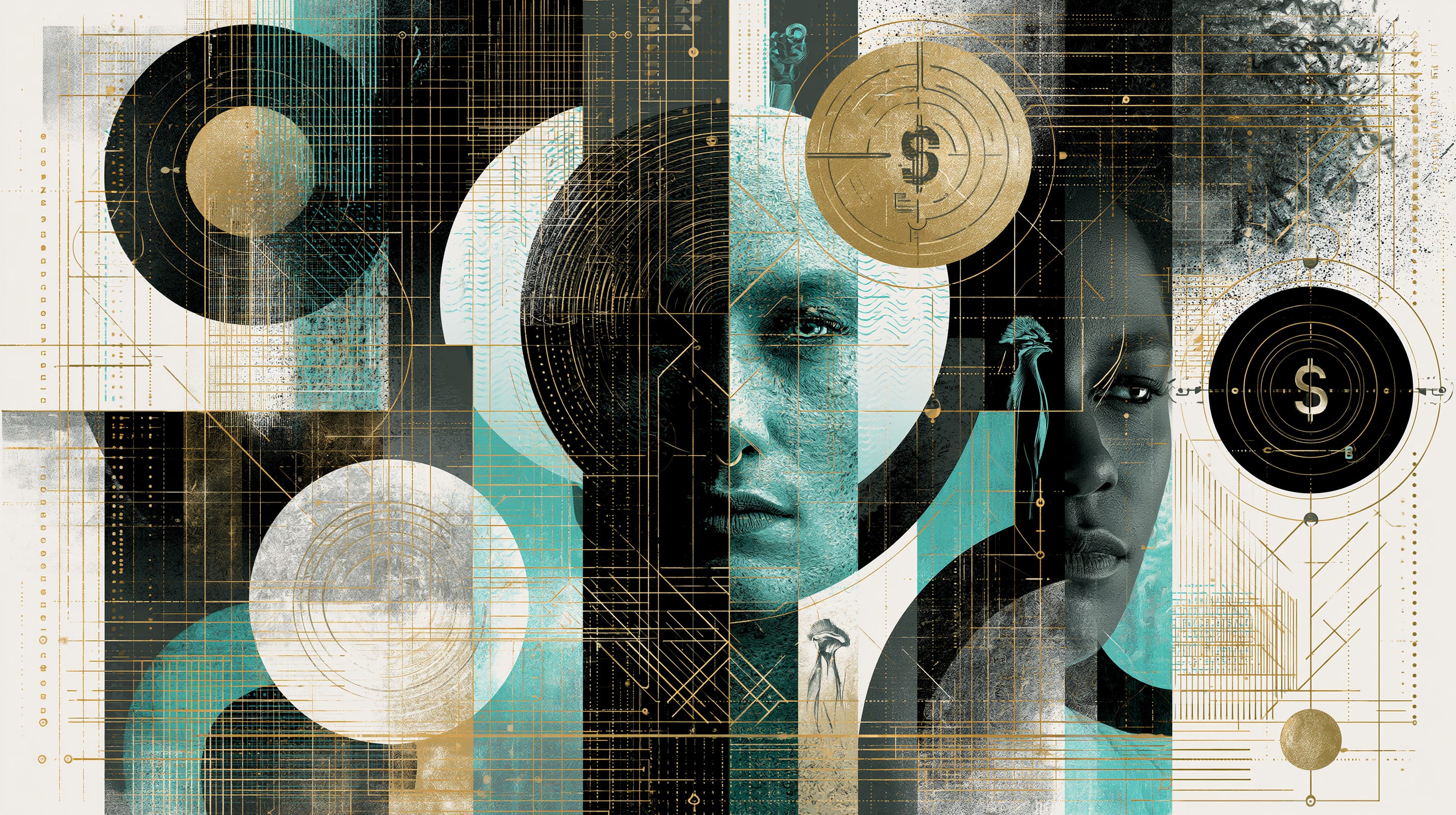
Most people don’t have access to funding. Many don’t know how to get it even if they could. The traditional pathways — business loans, venture capital, angel investment, small business grants — were designed by people who already understood how they worked, for people who were assumed to share that knowledge.
So people adapt.
Some are working full time and building in the margins of their evenings. Some are managing chronic illness and can only give what their energy allows on the days they have any energy to give. Some tried to get funding and were told no. Some never knew the door existed in the first place.
This isn’t failure. This is vision operating under real constraints in a dense world with very few instruction manuals.
And the digital product — the guide, the course, the newsletter, the download — is what vision looks like when it refuses to wait for a system that isn’t coming. It’s the mechanism for the resource constrained.
I watched this up close at a community market in Atlanta recently.
One vendor had been selling delicious food and refreshing drinks for years — loyal customers, real relationships, genuine quality. No website. No way to reach people who weren’t physically standing in front of her table. No infrastructure for the next chapter of what she was building. No container for her obvious passion in feeding her community.
Another vendor had a product that could be drop-shipped — inventory held, packaged, and shipped by a third party. He was doing everything manually. Nobody had shared with him that the alternative exists.
A Bluetooth speaker sat silent because nobody in the room knew how to troubleshoot the connection issue.
And people stayed. Not to buy. To talk. To be in the same room with someone who was building something real and to feel, for a moment, like that was possible for them too.
Someone wanted to buy my personal framed affirmation at the Cielo Studio table. Not the printed guide — the one I had brought for myself. The one I look at daily to affirm my purpose. The one that wasn’t for sale.
What they wanted wasn’t a product. It was proof. Proof that someone else had found a way through. Something to hold while they were finding their own. And something inspirational in a heavy and weighted world.
That’s what the workaround economy runs on. Not just ingenuity. Not just adaptation.
Hope.

We know the system can be redesigned. Kiva proved it.
A microfinance platform that connects lenders directly with borrowers — small loans, real businesses, lives changed. When you redesign a lending system around access rather than risk avoidance, people build extraordinary things. The system wasn’t broken. It was just pointed in the wrong direction.
The tools exist. The will is the variable.
So, what do we do in the meantime?
We build the smallest thing we can. We show up in the workaround economy with our whole selves — not apologizing for the size of what we could afford to start, but understanding it for what it is.
A door.
And then we do something radical.
We shop small. We subscribe local. We hire from within the community. We keep the capital circulating among the people building it instead of sending it upward to platforms and algorithms that were never designed for us and were never going to send it back.
We become the system we needed.

I’m building at the intersection of technology, wellness, and culture. I started with a $19 guide, a free session, and a newsletter with a handful of subscribers. I am fully inside the workaround economy.
Every piece of what I’m building — the guides, the newsletter, the tech education initiative, the app — started as the smallest buildable version of something much larger. Not because that was the dream. Because that was the door that was open.
And I’m not embarrassed by that.
I’m inspired by it. I am proud.
Because every person I see building something small — with everything they have, under real constraints, without waiting for permission — is proof that the vision didn’t die when the system said no.
It just found another outlet.
The workaround was never the destination.
It was always just the beginning.
I mentioned technomancer earlier. I will share more on that soon.
And the person who wanted my framed affirmation. The thing I look at every day when I sit down to work on Circuit + Soil. I gave it to him — because this project is my mandala, and I believe in releasing things when it’s time. This offered me a chance to write a new affirmation — with an intention that starts, “I am the people’s CTO” — and I am here to build something great.
Will you join me?
// thoughts before dawn.